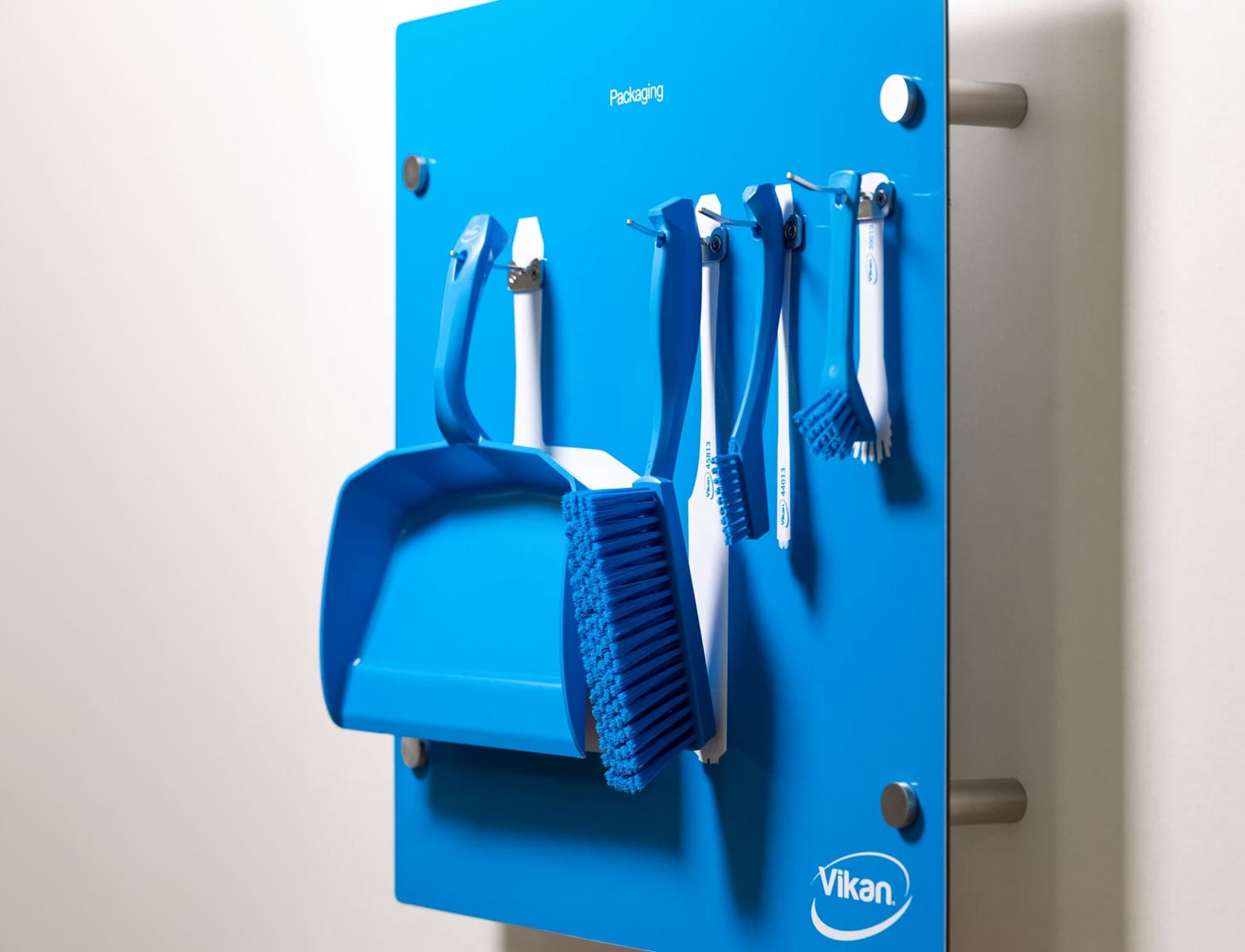

The 5S system is more than a program; it is a comprehensive system for organizing spaces so work can be performed efficiently, effectively, and safely. This system focuses on putting everything where it belongs and keeping the workplace clean, which naturally promotes a safer workplace with more efficiency. A well-executed 5S system minimizes cross-contamination, cuts operational downtime, speeds up changeovers, and ensures continuous audit readiness under strict FSMA and SQF certification standards.
Originating from Japanese lean manufacturing principles, 5S stands for Sort (Seiri), Set in Order (Seiton), Shine (Seiso), Standardize (Seiketsu), and Sustain (Shitsuke).
While general manufacturing uses 5S primarily for productivity, food processing facilities rely on 5S as the physical foundation for food safety, allergen management, and micro-sanitation.
It's a crucial part of a food safety program, but when implementing a 5S system, it is important to remember to start small. Start with a pilot project to get a feel for if/what employee training is needed—how to implement the system, how to track progress, and how to celebrate success. (Learn more in Tiffini Pieper's recent article at FoodManufacturing.com).
Separate tools that are needed to get the job done and remove everything else. Sorting helps minimize cross-contamination and cross-contact by separating food-contact and non-food-contact items.

Reduce the need to be away from the workstation by placing all relevant tools within reach of operatives. Color-coding can be introduced to keep food-contact and non-food-contact items in separate zones and to keep allergens apart where needed. Shadow boards can be used to give every tool a place.

Keep tools, machinery, and the work area clean to maintain safety and order in the workplace. Routine cleaning within your facility can help spot leaks, cracks, or misalignments, reducing the risk of equipment failure, safety hazards, and loss of productivity.
Introduce shadow boards and write standard operating procedures (SOPs) to create practices that will ensure the maintenance of the steps you have already taken. The process should have a natural flow and be more efficient.
 Step 5: Sustain
Stay consistent and constantly review standards with daily, periodic, and change-only checks.
Incorporating signs, labels, safety tapes, floor markings, and shadow boards are effective ways to visually communicate throughout a facility and maintain a successful 5S system.
Signs & Labels: Help increase awareness and communication - customize your safety sign
Safety Tapes: Identify specific areas or items.
Floor Markings: Ideal for marking aisles, hazard boundaries, and color-coded areas.
Shadow Boards: Improve safety and speed up processes by extending equipment lifespan and eliminating missing tools.
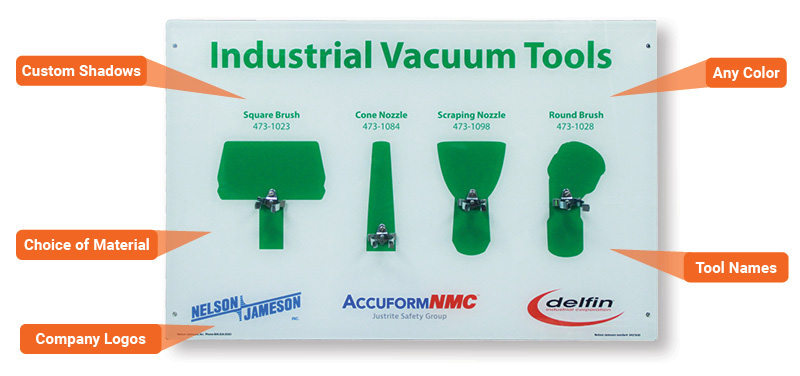
Organize your tools, supplies, equipment, and materials while providing a striking, graphical visual point-of-storage for tools. Can be designed to any size and style you require—use any color, including logos, messages, symbols, or even full-color images!
Maintaining an organized visual plant with the 5S System also directly streamlines compliance with FDA's FSMA 204 Traceability Rule and GFSI benchmarks (SQF, BRCGS, FSSC 22000):
Proper 5S ensures any operator or sanitation worker can find any tool or spot a clean hazard in under 30 seconds, directly driving Overall Equipment Effectiveness (OEE) and helping improve food safety in any facility and protect consumers.
Contact our food safety and 5S specialists at sales@nelsonjameson.com, call 800-826-8302, or get your color-coding assessment to begin your journey to better food safety and efficiency today.



September 28, 2026
Uncontained hair remains one of the most frequent physical contaminants in food processing environments,...
September 23, 2026
Keeping your facility's Clean-in-Place (CIP) operations running smoothly is critical — especially when o...
September 23, 2026
For years, the food manufacturing and dairy processing industries have relied on "reactive control". In ...