
As most in the food industry know, looking clean isn't the same as actually being clean. Though a new cleaning tool may appear to be ready for use right away, especially those sealed in plastic pouches, they need to be prepped for their first use. Here are a few steps that should be taken to ensure all new tools are ready for use in food production facilities:
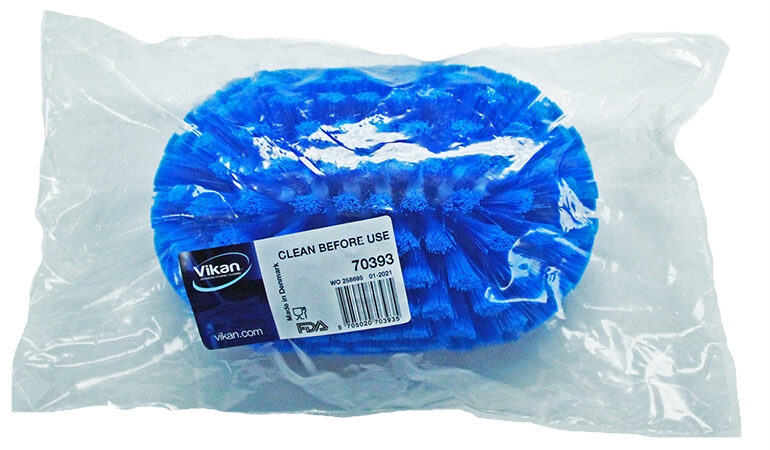 Remove Labels
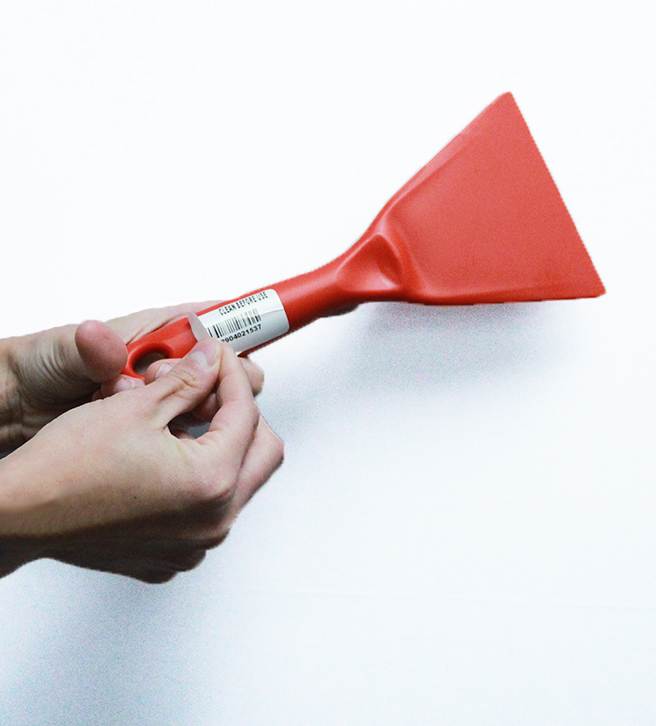
It is essential to completely remove any label and adhesive, as the sticky residue can be a trap for debris and bacteria. This task is most easily done when dry, but if there is residual stickiness, simply use a towel with warm soapy water, or a towel soaked in vinegar to remove anything left behind.
Since most tools are not produced in factory settings with the same rigorous sanitation requirements as food manufacturing, it is highly recommended that new tools be put through an industrial dishwasher or hand-washed prior to their first use.
 Sanitize for High-Risk Conditions
Follow HACCP plans for how clean the tool should be before use. If a tool will be used in a high-risk environment, it should be sterilized to ensure any microbes that may have contaminated the item before it arrived are fully destroyed.
In order to prevent mold and other microorganisms from growing, it is important to ensure the tool is completely dried. Whether by hanging or by using an industrial dishwasher's drying cycle, tools must be dry to be considered clean.
Information provided by Vikan®
October 21, 2026
Line contamination and product recalls carry massive financial and reputational risks. Aseptic sampling ...
October 21, 2026
Drawing samples from thick or heavy liquids often causes needle clogs, slow sample draws, and incomplete...
October 20, 2026
In food and beverage manufacturing, robust environmental monitoring programs (EMPs) serve as the primary...